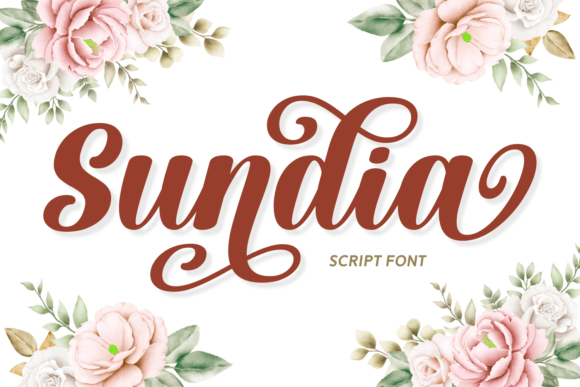
Sundia: A Romantic Script Font for Handmade Labels & Invitations
It started with a candle label—just a simple soy blend named “Honeysuckle Dawn.” I’d sketched the layout on paper, printed a test sheet, and opened my design software. But something felt off. The clean sans serif I’d used before looked crisp, yes—but it didn’t whisper *warmth*, *intimacy*, or *handmade care*. So I scrolled through my Script Amp collection, paused at Sundia, and typed the name in lowercase. Instantly, the letters curved like ribbon tied by hand—bold where it needed presence, delicate where it invited pause. That’s when I knew: Sundia wasn’t just another script font. It was the quiet confidence behind every thoughtful detail I wanted my products to carry.
Sundia is a premium script font with generous swashes, confident letterforms, and a natural rhythm that feels both elegant and approachable. Its strokes have weight and grace—not overly ornate, not too minimal—making it ideal for makers who want sophistication without stiffness. Whether you're designing wedding invitations, boutique tags, printable wall art, or seasonal greeting cards, Sundia brings a romantic, hand-brushed energy that reads as intentional, not generic.
I first tested Sundia on a set of kraft paper gift tags for a spring collection. Using its standard lowercase “s” and the alternate swash “t,” I created soft, looping phrases like “with love” and “for you.” Printed on matte sticker paper and cut on my Cricut, each tag held up beautifully—even at 0.75 inches tall. That’s key: Sundia shines at display sizes (16pt and up), especially for short phrases, names, titles, and decorative accents. It’s not built for long paragraphs or fine-print ingredient lists—but that’s exactly why it works so well for handmade product labels, mug decals, tote bag slogans, and planner cover pages.
For physical products, readability matters—and Sundia delivers when used thoughtfully. On candle jars, I pair it with a clean sans serif (like Montserrat Light) for the scent name and ingredients, letting Sundia float above as the brand name. On greeting cards, I use its swash capitals for the opening line (“Dear friend,” or “Happy Birthday!”), then switch to a gentle serif for the body text. This kind of font pairing creates visual hierarchy while keeping the overall feel cohesive and handmade. No jarring contrasts—just quiet intention.
When designing digital printables—think wedding welcome signs, printable wall quotes, or planner undated monthly layouts—I always check Sundia’s OpenType features. It includes stylistic alternates, ligatures, and initial/final swashes. In design apps like Affinity Designer or Adobe Illustrator, enabling these gives your text subtle variation—no two “and”s look identical, no two “the”s repeat the same flow. That small detail makes digital downloads feel more personal and less templated.
For packaging, Sundia adds perceived value instantly. A plain white box becomes special with a Sundia-stamped “thank you” on the tape seal—or a delicate “hand-poured” script along the side of a soap box. I’ve used it on fabric gift wrap labels, laser-cut wood tags, and even heat-transfer vinyl for t-shirts. Because its outlines are smooth and consistent (no thin hairlines that vanish in cutting), it cuts cleanly on Silhouette and Cricut machines—even at 1.25 inches wide.
Seasonal work is where Sundia truly sings. For holiday tags, I layer its bold “joy” over gold foil cardstock. For summer wedding stationery, I use its lightest swash version for menu headers—then go bolder for the couple’s names. And for farmhouse-style signs? A single word like “gather” or “bloom” in Sundia, centered on reclaimed wood, says everything without shouting.
Of course, real-world use means checking the files. Sundia comes in OTF and TTF formats, includes multilingual support (Latin Extended-A), and carries full commercial licensing—so you’re covered whether you’re selling physical mugs, digital Canva templates, SVG cut files, or printable party kits. Before uploading to Etsy or sending to a print shop, I always open the font file to confirm which weights and alternates are included. Most versions offer Regular + Swash variants, but double-checking avoids last-minute swaps mid-design.
One thing I’ve learned: Sundia isn’t about adding decoration—it’s about reinforcing voice. When customers see it on your Instagram story, your product label, or your printable preview image, they’re not just reading words. They’re sensing care, consistency, and craft. That’s why I keep it open in my design workspace year-round—not as a seasonal accent, but as part of my brand’s quiet signature.
If you work with physical goods—candles, ceramics, botanicals, textiles—or create digital assets like planners, quote prints, or invitation suites, Sundia fits naturally into your workflow. It doesn’t demand attention; it earns it. And in a world of fast-scrolling feeds and crowded marketplaces, that kind of quiet distinction is exactly what handmade makers need.
Try it on your next small-batch label. Test it beside your favorite sans serif. See how it moves across a sticker sheet or settles into a wedding envelope. You’ll notice something right away: Sundia doesn’t just sit on the page. It breathes with it.